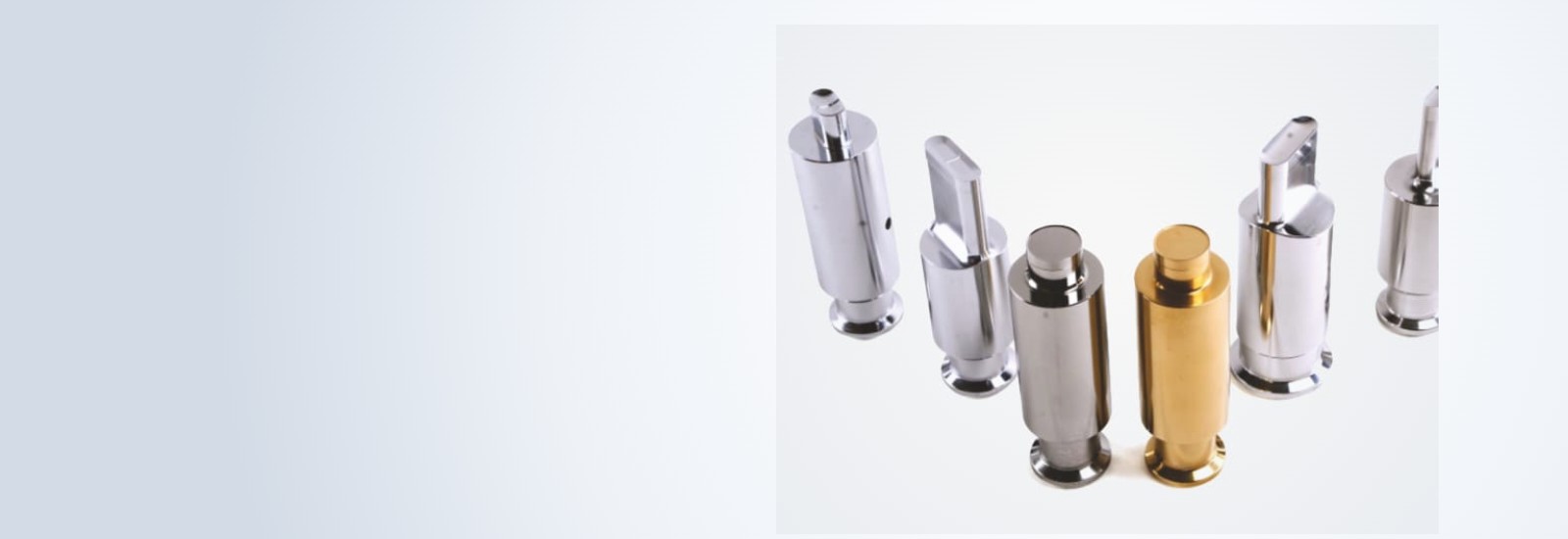
Punches and dies are the most precise and most expensive part of a tablet press, and tablet quality depends on their condition. Proper care extends tool life and reduces rejects and stoppages. Here is what tablet tooling maintenance consists of.
1. Cleaning after every product changeover
Residues of product and lubricant on the tools cause corrosion and sticking. Tools are cleaned straight after use — by hand or in ultrasonic baths — and dried thoroughly.
2. Inspection and measurement
After cleaning, every punch is inspected for scratches, chipped edges, wear of the tip face and embossing. The working length of the punches is measured regularly — length variation within a set directly affects tablet weight and hardness.
3. Polishing
Polishing restores a smooth tip face and often solves sticking. Do not overdo it: excessive polishing changes the cup geometry and embossing.
4. Lubrication and corrosion protection
Before storage, tools are coated with a protective oil compatible with your production requirements. This is especially important for tooling made of standard tool steels.
5. Storage and transport
Punches must not touch each other: use individual trays or cabinets with compartments for storage and protective cases for transport. Each set is tracked under its own number with a history of use and measurements.
When to replace tooling
- working length is out of tolerance or variation within the set no longer allows weight and hardness to be held;
- embossing is worn and cannot be restored by polishing;
- edges are chipped, or the surface has deep scratches or corrosion;
- sticking persists after polishing.
AT Engineering supplies tablet press tooling and tool care equipment for inspection, polishing, cleaning and storage. Read about the causes of sticking in our article on tablet sticking to punches. Contact us and we will select a solution for your production.